
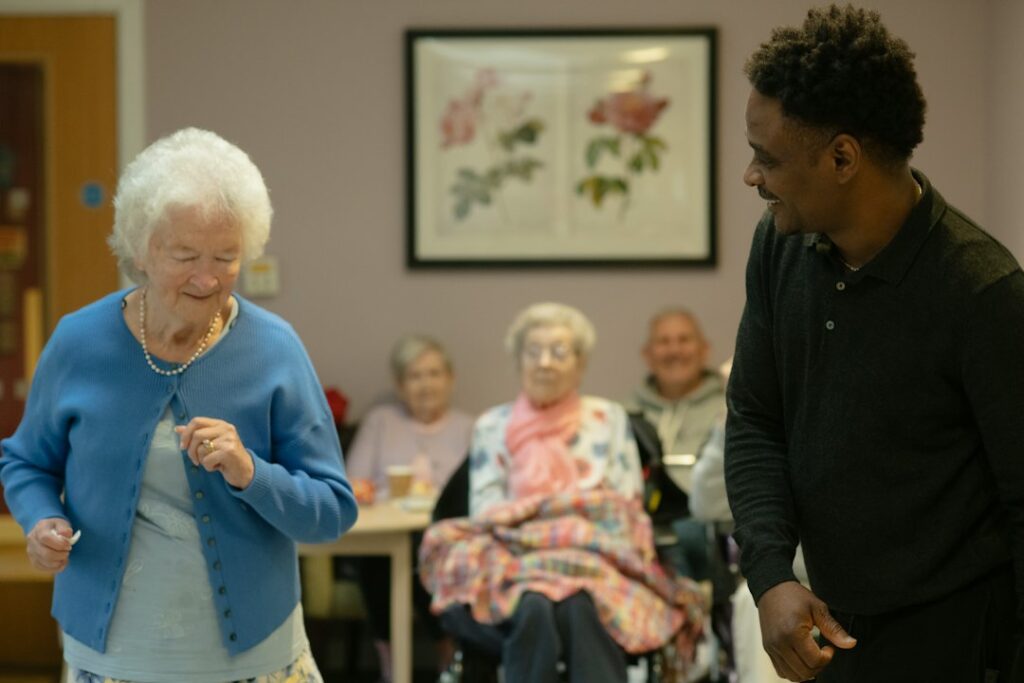
Volunteers can make assisted living feel more connected, personal, and responsive to residents’ interests. In Wyndmoor, PA, volunteer involvement may include conversation, activities, companionship, advocacy, seasonal support, and help maintaining links with the surrounding community.
Volunteers do not replace licensed staff or provide services beyond their training. Their role is to add time, attention, creativity, and social connection while respecting each resident’s privacy, preferences, abilities, and right to choose.
What do volunteers do in assisted living communities?
Volunteers commonly support social, recreational, educational, and companionship activities. Their responsibilities depend on the residence, their training, and the needs of the people they serve.
Examples may include:
- Reading aloud or discussing newspapers, books, or family photographs
- Playing cards, board games, puzzles, or simple group games
- Assisting with arts, crafts, gardening, music, or seasonal activities
- Talking with residents who may have limited visitors
- Helping residents write letters, make phone calls, or use video calls
- Accompanying residents to approved group activities
- Supporting worship, reflection, cultural programs, or discussion groups
- Sharing hobbies such as knitting, photography, cooking demonstrations, or storytelling
- Helping organize resident-led clubs or interest groups
Some volunteers participate on a regular schedule, while others help with special events or occasional programs. Consistency is often more valuable than a single large activity because familiar volunteers can become trusted parts of a resident’s routine.
How do volunteers improve quality of life?
The most meaningful contribution is often individual attention. A resident may not need a complicated program; they may simply want someone to listen, remember a personal story, or share a quiet activity.
Regular social contact can help reduce loneliness and support a resident’s sense of identity. Conversations about former work, family traditions, favorite music, gardening, local history, or holiday customs may encourage memory and self-expression without treating the person only as a care recipient.
Volunteers can also help residents participate at their own pace. Someone who does not want to join a large group may enjoy a short hallway conversation, a one-on-one game, or sitting outdoors when weather and mobility conditions allow.
In communities serving people with memory loss, volunteers may provide calm, familiar interaction. Activities should be adapted to the resident’s abilities and should not pressure anyone to perform, remember facts, or remain engaged longer than desired.
Can volunteers provide hands-on care?
Usually, volunteers are not a substitute for direct-care staff. Personal care tasks such as bathing, toileting, dressing, transferring, medication administration, wound care, and managing medical equipment require appropriate staff qualifications, supervision, and authorization.
A volunteer may escort a resident to an activity, but that does not automatically mean the volunteer can lift, reposition, or physically assist the resident. Even apparently simple tasks can create fall, injury, privacy, or liability concerns.
A safe volunteer program clearly explains:
- Which activities volunteers may perform
- What training is required
- When staff must be present
- How to respond to an emergency
- What information must remain confidential
- How to report a concern about a resident’s condition or safety
Residents and families should expect volunteers to understand these boundaries. A volunteer who notices a change in mood, confusion, breathing, mobility, or behavior should notify designated staff rather than attempting to diagnose or solve the problem.
What training should assisted living volunteers receive?
Training varies, but a responsible program should cover more than the activity itself. Volunteers may need instruction on resident rights, confidentiality, infection prevention, emergency procedures, communication, dementia awareness, fall prevention, and boundaries.
They should also learn how to avoid common forms of unintentional disrespect. For example, speaking to a family member instead of directly to the resident, rushing a response, or assuming that a person with a disability cannot make choices can undermine dignity.
Additional screening or orientation may be required depending on the role. Programs involving regular contact with vulnerable adults may include background checks, reference checks, health requirements, or supervised visits.
Training should be ongoing. A volunteer may need new guidance if a resident’s care plan changes, if an activity creates an unexpected risk, or if the community updates its procedures.
How can volunteers support residents with dementia?
Volunteers can be helpful when they focus on comfort, familiarity, and simple choices. Good activities often use preserved abilities and personal interests rather than testing memory.
Appropriate approaches may include:
- Looking through photographs
- Folding towels or sorting familiar objects
- Listening to preferred music
- Watering plants with supervision
- Singing familiar songs
- Taking a short, approved walk
- Sharing a snack or beverage when permitted
- Talking about childhood, work, pets, or hobbies

Volunteers should avoid arguing about incorrect statements or forcing a resident to participate. If a person becomes distressed, the activity should pause and staff should be informed.
In the region’s changing seasons, outdoor visits may need extra planning. Heat, humidity, winter ice, wet walkways, and sudden weather changes can affect comfort and fall risk. Indoor alternatives should be available rather than treating outdoor participation as mandatory.
Can volunteers serve as resident advocates?
Some volunteers have a formal advocacy role, including participation in long-term care ombudsman programs. These trained advocates help residents understand their rights, express concerns, and seek assistance with issues involving care, dignity, services, or living conditions.
An advocacy volunteer is different from a social visitor. The advocate’s role is not to make personal care decisions or act as a resident’s legal representative without authorization. Instead, the advocate listens, explains options, helps residents speak for themselves, and follows established procedures for addressing complaints.
Residents may also benefit from informal advocacy by ordinary volunteers. A volunteer can help a resident communicate a preference to staff, report a concern, or identify that a resident has not been included in an activity. The volunteer should not promise a particular outcome or keep safety concerns secret.
What should residents and families ask about a volunteer program?
Before welcoming volunteer involvement, residents and families may want clear answers about supervision, privacy, and boundaries.
Useful questions include:
- Are volunteers screened and trained?
- Who supervises them?
- What tasks are they allowed to perform?
- Can a resident decline a visit or activity?
- How are complaints or safety concerns reported?
- Are volunteers allowed to take photographs or use social media?
- How is confidential information protected?
- What happens if a volunteer becomes unavailable?
- Are activities adapted for mobility, hearing, vision, or memory needs?
A resident’s participation should remain voluntary. Volunteers should knock before entering private spaces, respect personal belongings, avoid accepting money or gifts, and maintain appropriate communication boundaries.
How can local residents contribute meaningfully?
People in Wyndmoor may have useful skills even if they have never volunteered in elder care. Retired teachers, musicians, gardeners, artists, readers, students, veterans, faith community members, and people who speak languages other than English may bring valuable interests to a residence.
The most effective contribution is usually reliable and resident-centered. A volunteer does not need to lead a large event. Showing up consistently to read, listen, play music, or support a small activity may be more beneficial than offering an elaborate program that does not match residents’ preferences.
A strong volunteer relationship is built on patience, clear boundaries, and respect. The goal is not to keep every resident busy. It is to help residents maintain choice, connection, dignity, and a meaningful sense of daily life.
